





What To Expect

  • Expert appraisal of your diamond ring
  • An estimate of each item's worth
  • A fair offer if you choose to sell
  • Safety, security & privacy for our customers
  • A variety of instant payout options: cash, wire, PayPal, Zelle, crypto or Cash App
sell diamond ring

Tell us about your item. A photo helps, if you have one.

Questions? Call us: 212-256-0025

Sell A Diamond Engagement Ring

Luriya buys diamond rings, including engagement rings, wedding bands and designer rings, at our office in Manhattan's Diamond District and nationwide by mail. We examine the stone, the setting and any lab report in front of you, explain how we reached our offer, and pay by cash, wire, PayPal, Zelle, crypto or Cash App if you choose to sell.

This page is about rings in particular: the center stone and the side stones, the metal and the maker, matching a report to the stone, and what resizing does. For loose stones and the 4Cs, see our page on selling diamonds. To start now, use the offer form at the top of this page.

What Decides the Value of a Diamond Ring?

Three-stone ring with an emerald-cut center diamond and tapered baguette side diamonds

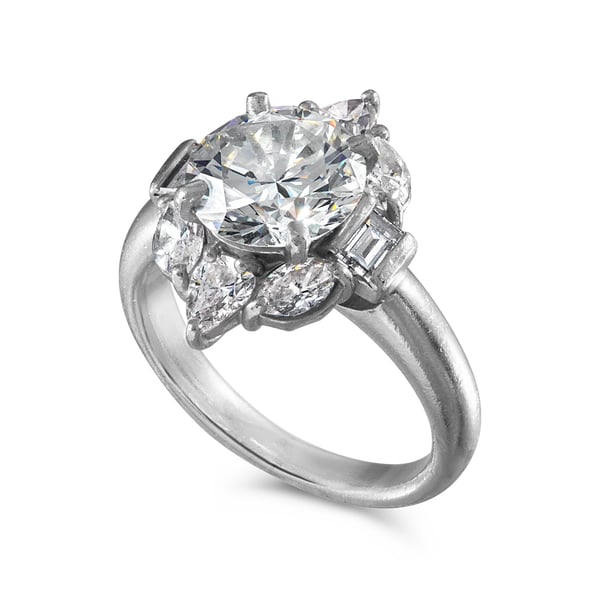
A ring is valued in parts and as a whole: the center diamond, any side stones, the metal of the setting and the maker, and then what the finished piece will bring. The center stone usually matters most, but it is rarely the only thing a buyer prices.

  • The center stone. Its cut, color, clarity and carat weight, its shape, and whether it is natural or lab-grown. Once it is set, its weight is estimated and its color and clarity are partly hidden, so the numbers are a close judgment, not a measurement.
  • The side stones. Larger matched stones, such as baguettes or trapezoids flanking a center diamond, are priced as diamonds. A band of tiny melee diamonds adds little.
  • The setting. Platinum, gold and their weight, plus any maker's stamp. A signed setting can add value of its own.
  • Condition. Chips on the center stone or the corners, worn prongs, a thinned shank.

How Do I Sell My Diamond Ring to Luriya?

Hand wearing a step-cut diamond ring with trapezoid side stones, with a blurred city backdrop

Selling a diamond ring to Luriya takes four steps: request an offer, bring the ring to our office or send it with the mail-in kit, get a free evaluation, and choose how you are paid. You hear the offer before you decide anything.

  1. Request an offer. Use the offer form at the top of this page, call (212) 256-0025 or email info@luriya.com. A photo of the ring and a few words about it help.
  2. Visit or mail it in. Book a visit to 30 W 47th St, Suite 300, New York, NY 10036, or ask for a free, insured mail-in kit.
  3. Get a free evaluation. We examine the stone and setting, check any lab report against the stone, and explain the offer.
  4. Choose your payout. Cash, wire, PayPal, Zelle, crypto or Cash App.

Bring a government-issued photo ID. New York City requires buyers to record it (the city's dealer checklist).

Should the Center Stone and the Setting Be Sold Together?

Pear-shaped diamond ring with tapered baguette side stones on a hand held over the other hand

Usually yes, and leave the stone in its setting. A buyer can value the whole ring, the stones alone or the metal alone, and a ring that is signed, antique or a collector's design is often worth more whole than in parts.

Pulling the diamond out yourself risks chipping it and loses the setting's value. If a buyer's offer is for the metal only, as scrap, that is a very different offer from one for the whole ring, so ask which it is. Never let a signed or period ring be melted before it has been looked at whole.

If your ring is old, with a cushion-shaped or small-tabled stone, our page on antique jewelry explains the old cuts.

Does My Ring Need a Lab Report, and Does It Have to Match?

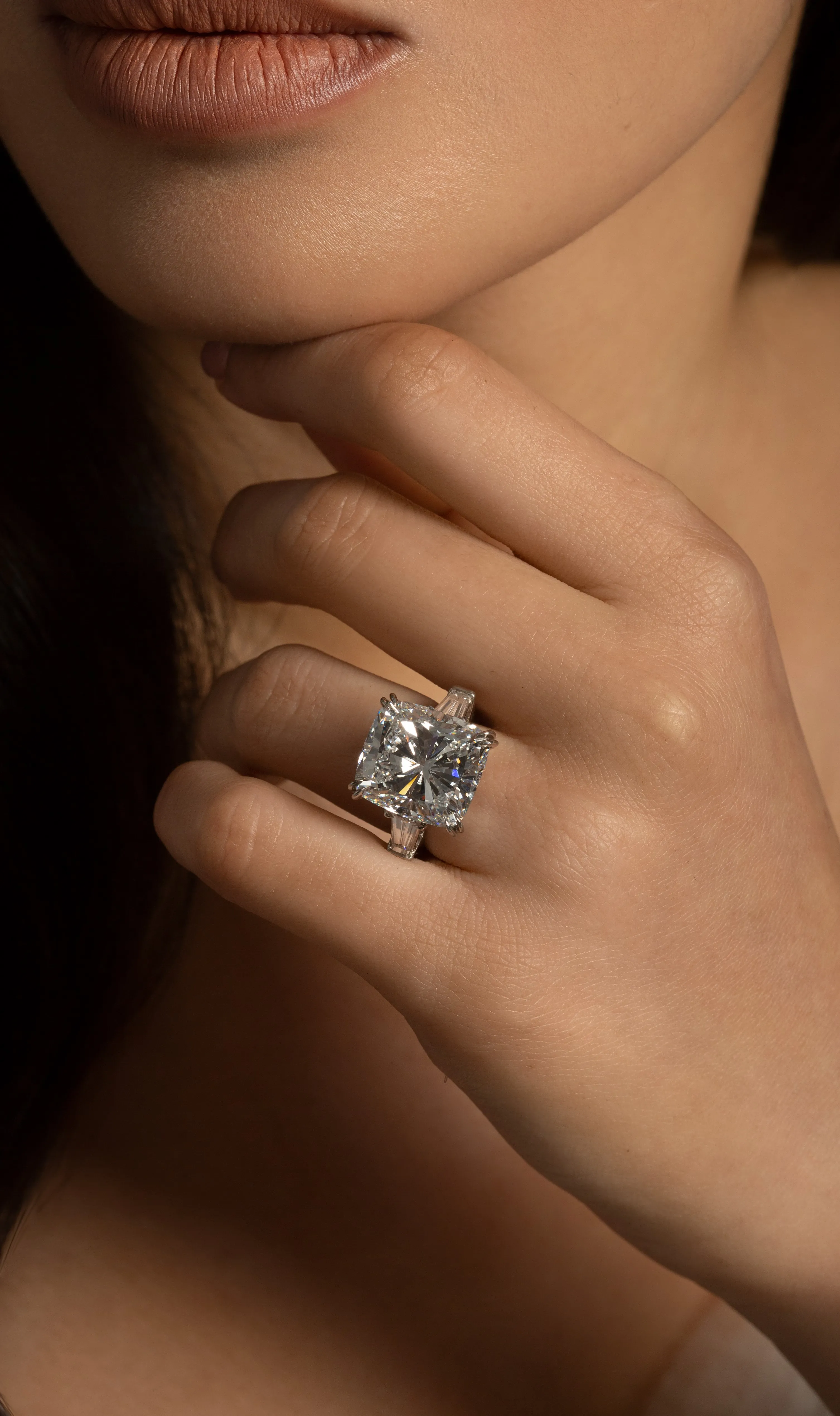
Hand held under the chin wearing a cushion-cut diamond ring with baguette side stones

A ring doesn't need a lab report to be sold, but a report from GIA, AGS or IGI makes the center stone easier to price, as long as it matches the stone in the ring. A report describes a stone. It isn't a valuation, and it supports an offer only once it is matched to the stone in hand.

  • Matching. We compare the report's measurements and any laser inscription on the stone's edge with the stone itself.
  • Lost report. Tell us. A ring without its report can still be evaluated; the stone is judged by eye and instrument, and the offer may reflect that.
  • Lab-grown stones. A lab-grown center diamond resells for far less than a natural one. If you aren't sure which you have, say so when you ask for an offer, and keep any report; we identify every stone before an offer.

Keep report numbers off the online form and bring the paperwork with you. Our post on diamond certification explains the reports in more detail.

Does Resizing a Ring Lower Its Value?

Hand resting on the arm of a chair wearing a large cushion-cut diamond ring

It can, which is why you shouldn't resize a ring before selling it. Cutting and re-soldering a band, adding sizing beads or bars, or thinning the shank leaves marks a buyer will notice, and it can weaken a band or stamp that was part of the piece.

The same goes for repairs and polishing: a buyer values the ring as it is, and the repair bill is yours. Tell us about any past resizing, repair or replaced side stone. We would rather know than find it under the loupe.

What About Designer and Signed Rings?

Portrait of a woman with a cushion-cut diamond ring at her chin and a diamond drop earring

A ring signed by a known house can be worth more than its stone and metal, and the signature, box and papers are part of the evidence. Look inside the band for a name or a stamp.

We cover the houses on their own pages: Harry Winston, Graff, Tiffany & Co., Cartier and Van Cleef & Arpels. Luriya is an independent buyer and isn't affiliated with any of them. For jewelry beyond rings, see selling jewelry.

Can I Get an Offer on My Ring From a Photo?

A photo shows the shape, the setting and roughly the size, but not the weight or the stone's color and clarity, so any number from a photo is preliminary until we have seen the ring. A report helps only when it matches the stone.

What Should I Ask Before Accepting an Offer on a Ring?

Ask each buyer the same questions so the offers can be compared: is the offer for the whole ring or only for the stone or metal; what carat weight and grades were used; are the side stones and the maker paid for; are there fees; how will I be paid; and what happens to the ring if I say no. Get two or three offers. If you also have the wedding band, ask for a price for the band alone and for the pair together.

Our post on selling a diamond ring walks through the process, and a mail-in kit is there if you can't visit.

Selling a Diamond Ring: Frequently Asked Questions

Should I sell my engagement ring and wedding band together?

You can sell them together or separately. Ask for a price for each band and for the pair, since a matched set can be worth more together, and decide after you have heard the offers.

Can I sell a ring if I lost the lab report?

Yes. The ring can still be evaluated, but the center stone is judged without the report, so the offer may reflect that. If you can find the report number later, bring it.

Do the box and receipt matter?

They help for a signed or designer ring, since they support who made it. A receipt shows what was paid at retail, which isn't what a buyer pays on resale.

Can I sell a ring with a chipped diamond or a missing side stone?

Yes. A chip or a missing side stone lowers the value, but the ring is still evaluated for its remaining stones and metal. Mention it when you ask for an offer, and keep any loose stone.

What if my ring is a family heirloom?

It is evaluated the same way, with extra attention to age and maker. If it is old, see our page on antique jewelry, or on estate jewelry if you are selling for an estate.

How do I know whether my center diamond is natural or lab-grown?

A lab report states it, and many lab-grown stones carry a laser inscription saying so. We identify the stone as part of the evaluation. Lab-grown diamonds resell for much less than natural ones.

Ready to sell? Use the offer form at the top of this page or call (212) 256-0025.

Updated November 2026

Have a jewelry expert appraise your fine items

Send in your valuables to get the best price